THE PSYCHOLOGY OF YOU

Psychology video library.

Clear explanations. A little more perspective.
Explore mental health and the patterns that shape our lives.

With Dr. Rami Nader

Watch here, then go deeper with a related psychology guide.

From the archive

Page 15 of 15 · 22 videos

Cognitive Behavioral Therapy (CBT) Explained: More than Just Talk Play video

December 3, 2020

Cognitive Behavioral Therapy (CBT) Explained: More than Just Talk

Cognitive Behavioral Therapy (CBT) is one of the most effective and research-supported approaches for treating mental health conditions like anxiety, depression, and PTSD. But many people still don’t fully understand what CBT is or what actually happens in a CBT session. This video breaks down the core ideas behind CBT, including how thoughts, behaviors, and emotions are interconnected and why targeting thoughts and behaviors is key to emotional change. Unlike open-ended talk therapy, CBT is structured, skills-based, and focused on the present. You won’t just discuss how you feel, you’ll learn specific tools to manage difficult thoughts and behaviors that are keeping you stuck. Homework is a central part of the process, because real change happens between sessions. Just like learning an instrument, the more you practice CBT skills outside of therapy, the more progress you make. This video also covers how CBT is goal-oriented, time-limited, and designed to help you become your own therapist.…

Watch on YouTube
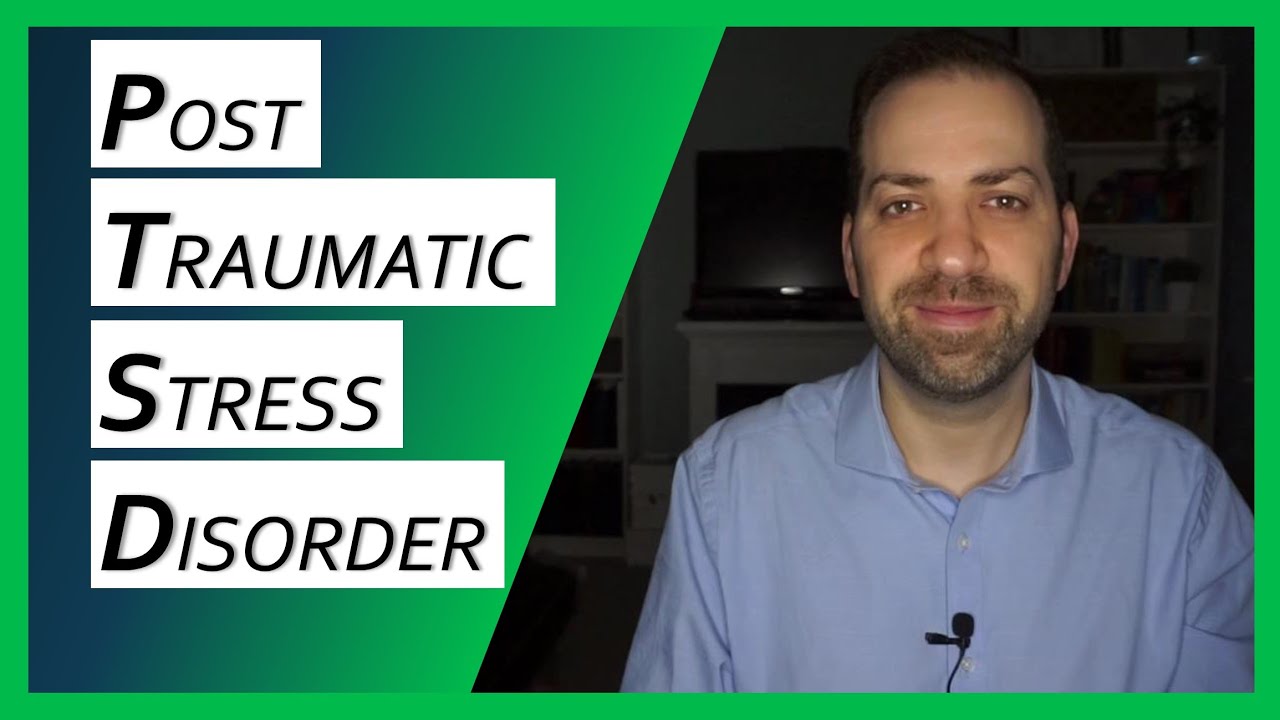
PTSD Is More Than Flashbacks – Here’s What It Really Looks Like Play video

November 26, 2020

PTSD Is More Than Flashbacks – Here’s What It Really Looks Like

Post-traumatic stress disorder (PTSD) is one of the most recognized mental health diagnoses, but it remains widely misunderstood. Many people think PTSD is just about flashbacks or combat trauma, but the condition involves a complex set of symptoms that can affect every part of a person's life. PTSD includes four distinct symptom clusters: re-experiencing, avoidance, negative changes in thinking and mood, and hyperarousal. Each cluster has its own unique features and can show up in very different ways across individuals. This video breaks down each symptom cluster and explains how PTSD may affect thoughts, emotions, memory, behavior, and relationships. From flashbacks and nightmares to emotional numbing, irritability, guilt, and hypervigilance, the symptoms can be wide-ranging and deeply distressing. PTSD also affects concentration, sleep, and a person’s ability to connect with others, often making everyday life feel overwhelming or unsafe. It’s also important to understand that PTSD can result from more than combat.…

Read a related guideTrauma & PTSD
Watch on YouTube
INSOMNIA Problems? Fix Your SLEEP Without Sleeping Pills Play video

November 19, 2020

INSOMNIA Problems? Fix Your SLEEP Without Sleeping Pills

Struggling with sleep can be exhausting and frustrating. Whether it’s trouble falling asleep, waking up in the middle of the night, or starting your day at 4 a.m. despite being tired, sleep problems can take many forms and affect every part of your life. This video covers a range of strategies designed to give you the best chance at better sleep, without promising miracle fixes. Sleep hygiene is more about creating conditions that support your body’s natural ability to sleep than forcing yourself to drift off on demand. Topics covered include how to set a consistent sleep and wake-up schedule, why naps might be making things worse, and how to develop a bedtime routine that helps your mind and body wind down. You’ll also hear about common mistakes like checking the clock at night, relying on alcohol to fall asleep, or exercising too close to bedtime, all of which can backfire. Another important aspect discussed is the role of stress, anxiety, and mental health in sleep disruption. Sleep problems are often symptoms of broader issues like depression, anxiety, or PTSD.…

Watch on YouTube
What is DEPRESSION? 9 Telltale Signs of Depression Play video

November 12, 2020

What is DEPRESSION? 9 Telltale Signs of Depression

Depression is more than just sadness. It can creep in quietly, affecting how you think, feel, eat, sleep, and function, often without you even realizing what’s happening. In this video, we explore the 9 telltale symptoms of depression, ranging from mood changes and loss of interest to more overlooked signs like cognitive difficulties and physical fatigue. Whether you're experiencing these symptoms yourself or worried about someone you care about, understanding the full range of what depression can look like is crucial. Some symptoms are commonly known, like low mood or sleep problems. Others, like slowed thinking, irritability, or feeling emotionally numb, are less talked about but equally important. You’ll also learn how depression affects appetite, energy, concentration, and even how people relate to their own thoughts and decisions. Many people silently struggle with feelings of guilt, worthlessness, or even passive thoughts of death, symptoms that deserve to be taken seriously, not brushed aside.

Read a related guideDepression
Watch on YouTube
#14 How You Can PREVENT Worry Relapse - Overcoming Worry & Anxiety Play video

November 5, 2020

#14 How You Can PREVENT Worry Relapse - Overcoming Worry & Anxiety

Many people make progress in managing their worry and anxiety but find themselves slipping back into old habits when life gets stressful again. This can be frustrating, especially after putting in the work to gain control. In this video, we explore how to maintain progress and prevent relapse in worry management, using skills that are supported by clinical research on generalized anxiety disorder. Based on the work of Dr. Michel Dugas and his team, this cognitive-behavioral approach shows strong evidence for long-term effectiveness when the tools are consistently used. We discuss the critical differences between people who sustain their gains versus those who relapse. You’ll learn why ongoing use of worry management skills, like tolerating uncertainty, challenging beliefs about worry, and problem solving, is so important. We also walk through three practical strategies: planning ahead for predictable stressors, identifying early warning signs of a return to excessive worry, and creating a written “worry emergency plan” that you can refer to when needed.…

Watch on YouTube
#13 How to Manage COMPLEX WORRIES - Overcoming Worry & Anxiety Play video

October 29, 2020

#13 How to Manage COMPLEX WORRIES - Overcoming Worry & Anxiety

Not all worries fit neatly into a single category. Sometimes you're dealing with a real, present-day problem and fears about the future spiraling out of it. These complex worries, also called mixed worries, often combine what’s called Type 1 worries (about current issues) and Type 2 worries (about the process and consequences of worrying itself). In this video, you’ll learn how to apply proven CBT-based worry management strategies to these multi-layered situations. This video walks through a clear step-by-step recipe based on clinical research for understanding and tackling these complex worry patterns. You’ll see how identifying the structure of the worry, applying uncertainty tolerance techniques, and challenging worry beliefs can lay the groundwork. From there, you’ll discover how to apply problem-solving methods for the immediate issue, and how to use cognitive exposure techniques to address future-oriented fears that linger. This practical approach gives you the structure and clarity to break down and manage worries that feel overwhelming or tangled.…

Watch on YouTube
#12 A Worry Management Guide – Putting it all together - Overcoming Worry & Anxiety Play video

October 22, 2020

#12 A Worry Management Guide – Putting it all together - Overcoming Worry & Anxiety

If you've ever struggled with constant worry, you know how exhausting it can be. Whether you're dealing with current problems or anxieties about what might happen in the future, this episode outlines a structured and research-backed method to help you break the cycle. Using cognitive behavioral therapy (CBT), we walk through the complete recipe for managing both Type 1 and Type 2 worries. Type 1 worries are about real, current issues, problems you’re actually facing. Type 2 worries are about imagined future events, scenarios that haven’t happened and may never happen. This video explains how to identify which type of worry you're experiencing and gives you a step-by-step framework for tackling each. You’ll learn how intolerance of uncertainty, negative problem orientation, and worry-related beliefs keep worry alive and what to do about them. We also introduce tools like worry awareness training, uncertainty tolerance strategies, belief challenging techniques, problem-solving steps, and cognitive exposure to reduce the emotional power of worry thoughts.…

Watch on YouTube
#11 Tired of Your Worst-Case WORRIES? Try This - Overcoming Worry & Anxiety Play video

October 15, 2020

#11 Tired of Your Worst-Case WORRIES? Try This - Overcoming Worry & Anxiety

If you find yourself constantly overwhelmed by worst-case scenarios that haven’t even happened yet, you’re not alone. These kinds of worries, Type 2 worries, are future-focused fears that can feel deeply upsetting and hard to control. In this episode, we explore how cognitive exposure, a technique grounded in cognitive behavioral therapy (CBT), helps reduce the emotional grip of these persistent worry loops. Instead of trying to suppress or avoid the thoughts, which often makes them come back stronger, cognitive exposure teaches you to face the worry head-on. By repeatedly imagining the feared scenario in vivid detail, you can gradually reduce the anxiety tied to it. This is the same process used in PTSD treatment, adapted for worries about things that haven’t actually happened. Using a structured method that includes writing and re-reading distressing scripts, cognitive exposure allows your brain to process the fear without reacting as intensely. Over time, this helps drain the emotional intensity from the thought, making it feel less overwhelming.…

Watch on YouTube
#10 Why You Keep Worrying About the Worst - Overcoming Worry & Anxiety Play video

October 8, 2020

#10 Why You Keep Worrying About the Worst - Overcoming Worry & Anxiety

Many people struggle with persistent anxiety because they fall into a common trap, trying not to think about the very thoughts that scare them the most. These future-focused, worst-case scenario thoughts are known as Type 2 worries. They often center around things like serious illness, failure, or personal loss. In this discussion, we break down what makes these worries so sticky and why avoiding them through thought suppression, also called cognitive avoidance, doesn’t actually help. In fact, research in cognitive psychology shows that trying not to think about a distressing thought only makes it more likely to recur. We use the classic “pink elephant” example to illustrate how thought suppression backfires and increases anxiety. Just like trying not to think about a pink elephant causes you to think about it more, trying to suppress Type 2 worries makes them stronger and more frequent.…

Watch on YouTube
#9 Problem-Solving Skills to Defeat Worry - Overcoming Worry & Anxiety Play video

October 1, 2020

#9 Problem-Solving Skills to Defeat Worry - Overcoming Worry & Anxiety

When it comes to managing anxiety and worry, one of the most overlooked but powerful skills is effective problem solving. In this video, we review a six-step approach grounded in cognitive behavioral therapy that helps you move from paralyzing overthinking to purposeful problem-solving. If you're someone who struggles with constant worry, especially about real-life, ongoing issues, learning to recognize and apply this framework can make a significant difference. You’ll learn how to define your problem clearly, set specific goals, generate and evaluate possible solutions, implement a practical plan, and assess whether your solution is actually working. Many people who worry a lot don’t lack problem-solving ability, they just don’t use the skills they already have. That’s often due to something called negative problem orientation, a tendency to see problems as threatening, unsolvable, or abnormal. This video not only outlines a problem-solving recipe that works, but also shows you how to shift your mindset so that you're more willing and able to use the tools you already possess.…

Watch on YouTube
#8 Why You Feel STUCK Solving Problems - Overcoming Worry & Anxiety Play video

September 24, 2020

#8 Why You Feel STUCK Solving Problems - Overcoming Worry & Anxiety

Negative problem orientation is one of the biggest reasons people get stuck in cycles of chronic worry. Many people with anxiety believe they’re bad at solving problems or that problems shouldn’t exist in the first place. This mindset can trap them in avoidant behaviors, make worries feel overwhelming, and even cause small issues to escalate into crises. But the issue isn’t your ability to solve problems, it’s the way you see them. In this video, you’ll learn how negative beliefs about problems, like thinking they’re abnormal, dangerous, or a sign of personal failure, can shut down your ability to act. We’ll also explore why people who worry a lot often have just as strong problem-solving skills as others, but struggle to use them. Drawing from CBT (Cognitive Behavioral Therapy), we’ll look at how to reframe problems as opportunities, reduce avoidance, and challenge the belief that problems should be easy or rare. If you’ve ever felt paralyzed by problems or avoided them until they became unmanageable, this video offers a clear and practical explanation of how to shift your mindset.

Watch on YouTube
#7 Challenging Worry Myths - Overcoming Worry & Anxiety Play video

September 17, 2020

#7 Challenging Worry Myths - Overcoming Worry & Anxiety

Many people who struggle with chronic worry don’t realize that part of what fuels their anxiety is the belief that worry is somehow helpful. These beliefs might sound like: “Worry motivates me,” “Worry helps me solve problems,” or “If I don’t worry, something bad might happen.” While these assumptions often go unnoticed, they quietly reinforce the habit of excessive worry and make it harder to break free from the cycle of anxiety. This video explores how to challenge these hidden worry beliefs through evidence-based cognitive therapy techniques. By walking through five common assumptions about worry and offering specific questions to test their validity, you’ll learn how to evaluate whether worry is truly useful, or whether it’s just adding to your stress. You'll also learn how to identify worry-driven thoughts, distinguish worry from problem solving, and reframe beliefs that reinforce anxiety. Understanding the difference between helpful preparation and unhelpful overthinking is a key step in reducing anxious habits.…

Watch on YouTube
#6 Five MYTHS About Worry - Overcoming Worry & Anxiety Play video

September 10, 2020

#6 Five MYTHS About Worry - Overcoming Worry & Anxiety

Why do we hold on to worry, even when it causes stress, exhaustion, and anxiety? For many people who worry excessively, it’s not just a bad habit, it’s tied to a set of hidden beliefs that worry is actually helpful. This video explores five of the most common beliefs that sustain chronic worry: that worry motivates action, improves problem-solving, prevents bad outcomes, prepares you emotionally for the worst, or reflects care and responsibility. These beliefs can make it harder to challenge and reduce anxiety because they make worry feel necessary, even when it clearly isn’t helping. We’ll break down each belief with real-world examples, and introduce the concept of metacognition, thinking about your thinking, to help you recognize when your mind is convincing you that worry is useful. Once you’re aware of these beliefs, you can begin to observe and challenge them, making it easier to manage your worry rather than letting it run the show. This approach draws on cognitive behavioral therapy (CBT) techniques used to treat generalized anxiety disorder and excessive worry.

Watch on YouTube
#5 Two Ways to Build Tolerance for Uncertainty - Overcoming Worry & Anxiety Play video

September 3, 2020

#5 Two Ways to Build Tolerance for Uncertainty - Overcoming Worry & Anxiety

Uncertainty is an unavoidable part of life, but for many, it’s also a major source of anxiety. Learning to tolerate uncertainty isn’t about pretending you’re not worried—it’s about training your brain to stop reacting to it as a threat. This deep dive explores two powerful, research-backed strategies for building tolerance for uncertainty: planned behavioral experiments and everyday decision-making shifts. The first method involves setting up what are called “tolerating uncertainty experiments.” These are structured, forward-thinking activities where you take an anxious prediction—like fearing your friend is angry—and test it out in real life. By tracking the actual outcome compared to your worry, you build evidence that uncertainty often doesn’t lead to disaster. The second method is more subtle but just as effective: using naturally occurring moments to do the uncertain thing, asking yourself, “If I were more tolerant of uncertainty, what would I do right now?” These techniques help weaken the grip of worry by creating a mental ‘bank account’ of successful uncertain moments.…

Watch on YouTube
#4 Manifestations of Intolerance of Uncertainty - Overcoming Worry & Anxiety Play video

August 27, 2020

#4 Manifestations of Intolerance of Uncertainty - Overcoming Worry & Anxiety

When people think about anxiety and worry, they often focus on thoughts and emotions. But one of the most powerful—and overlooked—drivers of chronic worry is intolerance of uncertainty, and it often shows up in our behavior long before we notice it mentally. Avoiding tasks, over-researching, procrastinating, asking for reassurance, or spreading yourself too thin might seem like separate issues, but they can all stem from the same psychological root: a deep discomfort with not knowing how things will turn out. These behaviors serve a purpose—they give a temporary sense of control or certainty in situations where outcomes feel unpredictable. But over time, they maintain and even intensify anxiety and excessive worry. The effort to eliminate uncertainty becomes exhausting, inefficient, and ultimately ineffective. By identifying how intolerance of uncertainty manifests in day-to-day actions, you can start shifting your approach. Patterns like not delegating, overprotecting others, avoiding commitment, or constantly second-guessing decisions can become clues.…

Watch on YouTube
#3 The Role of Intolerance of Uncertainty in Worry - Overcoming Worry & Anxiety Play video

August 20, 2020

#3 The Role of Intolerance of Uncertainty in Worry - Overcoming Worry & Anxiety

Worry doesn’t come out of nowhere—it’s often driven by something deeper: intolerance of uncertainty. People who struggle with chronic worry tend to have a low threshold for not knowing how things will turn out. Even a small amount of uncertainty can trigger a cascade of anxious “what if” thoughts, leading to emotional exhaustion and mental overload. This psychological sensitivity is similar to an allergy—what seems minor to others can feel overwhelming if you’re highly intolerant of uncertainty. Intolerance of uncertainty acts like a lens that distorts how we interpret situations, making negative outcomes seem more likely than they actually are. While uncertainty in life can lead to positive or neutral outcomes, this lens focuses attention only on the worst-case scenarios. That’s what makes worry so persistent and paralyzing. Trying to control every variable, plan for every possibility, or avoid the unknown can feel productive—but it never actually solves the problem. Uncertainty is everywhere.…

Watch on YouTube
#2 Understanding worry & worry awareness training - Overcoming Worry & Anxiety Play video

August 13, 2020

#2 Understanding worry & worry awareness training - Overcoming Worry & Anxiety

Worry often feels automatic, like your brain is running nonstop in the background, feeding you a stream of anxious thoughts. But underneath this experience lies a predictable process. Worry typically begins with a trigger, an internal sensation, thought, or external situation, that sparks a flood of “what if” questions. These thoughts either loop repeatedly or spiral into worst-case scenarios, generating anxiety and leaving you feeling drained and demoralized. This repetitive cycle is the engine that powers chronic worry. Understanding how this worry cycle works is the first step to interrupting it. A foundational skill for breaking that cycle is worry awareness training. Many people don’t realize how often they worry, or what specific thoughts are triggering their anxiety. That’s where a worry diary becomes essential. By tracking a sample of your worries, noting the time, trigger, specific what-if thoughts, and how anxious you feel, you begin to see patterns.…

Watch on YouTube
#1 Defining WORRY: 3 features & 2 types of worry - Overcoming Worry & Anxiety Play video

August 6, 2020

#1 Defining WORRY: 3 features & 2 types of worry - Overcoming Worry & Anxiety

Worry can feel relentless, but what exactly is it? At its core, worry is a mental process—a chain of thoughts focused on future negative events, often accompanied by anxiety. Many people use the terms worry and anxiety interchangeably, but they’re not the same. Worry is a thinking process; anxiety is the emotional response that comes with it. This distinction is crucial when learning how to manage worry effectively. There are three defining features of worry. First, it's a repetitive and often spiraling thought process. Second, it's future-oriented and negative—it’s rarely about good outcomes. And third, it triggers anxiety, which is what makes worry feel so emotionally draining. By understanding this structure, we can start to take a more objective look at what’s happening in our minds. We can also break worry down into two main types. Type 1 worry is about actual, current problems—things that are happening right now and require a solution. Type 2 worry is more speculative; it’s about things that haven’t happened yet and might never happen at all.…

Watch on YouTube
New Beginnings - Where this channel has been and where it is going Play video

August 2, 2020

New Beginnings - Where this channel has been and where it is going

It's a new day for this channel. What started out as a place to post videos for people who attended my community talks about Generalized Anxiety Disorder, PTSD, OCD and Anxiety Disorders has evolved and my hope is for it to be so much more - a place where people can find evidence-based information about psychology. My goal is to share the information, tools and skills that I use with my therapy clients in the hope that these videos can help people live better!

Watch on YouTube
Obsessive-Compulsive Disorder (OCD) Play video

February 26, 2018

Obsessive-Compulsive Disorder (OCD)

Dr. Rami Nader, R.Psych. gives a free public talk on Obsessive-Compulsive Disorder (OCD). The talk details the symptoms of OCD, a model to understand how OCD occurs (and the relationship between obsessions and compulsions) and some of the effective treatment approaches for managing OCD.

Read a related guideOCD
Watch on YouTube
Demystifying the ANXIETY DISORDERS: What They Are & How They Work Play video

October 20, 2017

Demystifying the ANXIETY DISORDERS: What They Are & How They Work

Free public talk presented by Dr. Rami Nader, Licensed Psychologist on October 19, 2017. The talk highlights the characteristics of various anxiety disorders and the mechanisms that underlie anxiety conditions. Dr. Nader reviews how avoidance, safety behaviors and beliefs about anxiety all maintain and perpetuate various anxiety disorders. For more information, visit www.raminader.com.

Read a related guideAnxiety
Watch on YouTube

READ. WATCH. REFLECT.

Take the next step in understanding.

Our psychology guides explain the ideas behind the videos, with everyday examples and questions to bring to a professional.

Explore psychology guides